Showing posts with label Lancia. Show all posts

Tuesday, September 25, 2012

Lancia Delta 1.8 Di Turbo Jet, 2009


  • Lancia Delta 1.8 Di Turbo Jet, 2009

Lancia Delta reflects perfectly the concept of "Anticrisis Luxury" as it fulfils the current requirements of prestige and mobility thanks to the logic of downsizing - i.e. it ensures high quality and performance, reducing cost, size and fuel consumption. Thanks to these winning characteristics, in March this model became the leader of its car range in Italy and is fast growing at European level.

The innovations of the 2009 range
The main innovation is represented by the 200 HP 1.8 Di TurboJet engine, the most powerful one of its range. It is an innovative petrol direct injection engine that confirms Lancia's preference for sports cars and, at the same time, its commitment to protect the environment by limiting emissions and fuel consumption.

These qualities are achieved by enhancing its brilliance, flexibility and the pleasure of driving which have always made this model stand out. This engine is produced by FPT - Fiat Powertrain Technologies - and is provided with a modern 6 speed automatic transmission. It delivers a maximum power of 200 HP (147 kw) at 5,000 rpm and a maximum torque of 320 Nm (32.6 Kgm) at 1,400 rpm. With such equipment, Lancia Delta can reach a maximum speed of 230 km/h and goes from 0 to 100 km/h in only 7.4 seconds. At the same time, the car stands out for low fuel consumption (7.8 litres per 100 km), reduced CO2 emissions (185 g/km) and a Euro 5 homologation.

The second innovation is the exclusive Executive version: a car addressed to clients who look for top luxury and comfort. The "top range" was designed to fulfil the requirements of business clients and members of the diplomatic and institutional worlds - as the attention invested in designing a comfortable passenger compartment shows. Seats are wrap around and comfortable as they are designed to business class standards. The back seats are comfortable for long trips with plenty of room for the legs. Therefore, Lancia Delta Executive offers a real, modern, in tune with the time alternative to bigger, heavier and more expensive cars. The fact this car was chosen to be the Official Car for the 9th World Summit of the Nobel Peace Prize held from 11th to 13th December 2008 in Paris - of which Lancia was the Main Sponsor - is not a coincidence. A Lancia Delta Executive fleet will also drive the international authorities to the G8 summit that will take place from the 8th to the 10th of July.

All these technological innovations - together with the self-adaptive bi-xenon headlights (Adaptive Xenon Light) and the integrated satellite navigator (Instant Nav) - were made thanks to the cooperation between the Brand and Magneti Marelli. We cannot forget that the cooperation between Fiat Group Automobiles, Magneti Marelli and Microsoft has given birth to Blue&Me™, a system complete with Telecom service functions - which Lancia Delta is the first one to offer - together with hands free, music player and navigation functions.

Film stars choose Lancia Delta
Lancia Delta was engaged for the Columbia Sony Pictures "Angels and Demons" new film kolossal. This film, inspired by Dan Brown's bestseller of the same title, is on the same line of the "The Da Vinci Code" and is also directed by Ron Howard, with Tom Hanks in the role of professor Langdon. Lancia celebrates this important product placement with a Lancia Delta Special Series that enhances the double soul of this model: an angel in terms of carbon emission and a devil in terms of performances. The proof is in the two engines available for this version, the 200 HP 1.8 Di TurboJet and the 190 HP 1.9 TwinTurbo, which ensure a better CO2/HP ratio for this range - i.e. maximum power for minimum emissions. The same winning features can be found in the other two models that make up the "Première Collection": 105 HP Ypsilon 1.3 Multijet and 95 HP Musa 1.3 Multijet.

For the movie launch of "Angel and Demons" scheduled for the 15th May 2009, Lancia has decided to launch an original communication campaign that goes under the slogan "One angel, 200 demons". Actions, performance and temperament: these three concepts dominate the commercial that, thanks to an agreement with Sony Pictures, exclusively shows some of the film shots of which the new 200 HP Lancia Delta 1.8 Di TurboJet is the protagonist. The press campaign is as sensational as the film as it combines one of the most emblematic film shots with a double image of the new Lancia Delta which clearly refers to its double soul: angelic on the outside, but with 200 demons inside.

Lancia Delta is increasingly the car chosen by stars. Since last year, this model has been the Official Car of the most prestigious film festivals sponsored by Brand: following its launch at the 65th Venice Film Festival, a fleet of Lancia Delta cars drove cinema stars to the red carpets in Rome, Milan and Turin.

The strengths of the new engine
The entire world acknowledges the fact that the Italian motoring school has always had the ability to produce gritty and temperamental engines, true "jewels" that are the result of the experience and passion of the engineers matched with their technical competencies acquired over years. The new 200 HP 1.8 Di TurboJet (Euro 5) is no exception.

The new engine is produced by FPT - Fiat Powertrain Technologies - and has a maximum power of 200 HP (147 kw) at 5,000 rpm and a maximum drive torque of 320 Nm (32.6 Kgm) at 1,400 rpm. Thanks to its combination with a 6 gear automatic/sequential transmission, the 200 HP 1.8 Di TurboJet provides an exciting and unmatchable drive: it can reach a maximum speed of 230 km/h and accelerate from 0 to 100 km/h in 7.4 seconds. In spite of these amazing performances, fuel consumption and emissions are surprisingly low: respectively 7.8 l/100km in the combined cycle and 185 g/km of CO2.

Thus, these innovative engines prove Lancia Automobiles' commitment to protecting the environment by containing emissions as well as reducing fuel consumption. All this is achieved by enhancing brilliance, flexibility and the pleasure of driving which have always made this model stand out. In order to achieve these extraordinary results, the 200 HP 1.8 Di TurboJet introduces petrol direct injection, turbocharging and an exhaust and intake double continuous phase transformer. The merging of these different technological solutions offers important advantages to clients such as the direct injection which means low fuel consumption for high engine performance. Furthermore, the turbocharger associated with the double phase transformer enables quick acceleration thanks to a particularly favourable drive torque curve.

Here are the details of all the innovations of the new 200 HP 1.8 Di TurboJet which was designed and developed by engineers of FPT - Fiat Powertrain Technologies, the sector of Fiat Group that provides innovation, design, plan and production activities for engines and gearboxes of all uses: from cars to industrial vehicles, from boats to agricultural machines. With about 20,000 employees, 16 plants and 11 research centres located in 9 different countries, this Sector represents a most significant presence in the field of engines at world level. In FPT, about 3,000 highly specialized engineers work on innovation technologies development and automation. The over 40 patents registered every year show quality and reliability of this group, making FPT - Fiat Powertrain Technologies - a great centre of technological excellence and constant innovation.

The Scavenging Technology
The amazing performances of this engine are a result of the application of the Scavenging technology which maximizes the drive torque at very low rpm by guaranteeing an incredible engine response speed to any driver request.

Direct injection
The direct injection reduces the temperatures in the combustion chambers through the evaporation of fuel and lowers the knock sensitivity. This enables the engine to achieve great performances even for a moderately high compression ratio (equal to 9.5) and ensures limited fuel consumption at a "partial" speed.
The direct injection system is essential in reducing emissions thanks to an advanced strategy of double injection. Furthermore, thanks to the direct control of fuel, it is possible to avoid some of the petrol getting directly to the exhaust manifold during the scavenging with negative effects on the catalytic converter's functionality. Lastly, this injection system of second generation is provided with a new high pressure pump (capable of managing petrol pressure of 150 bar) and innovative injectors with 7 holes that guarantee ideal evaporation for all operating conditions.

Double phase transformer
The two continuous phase transformers on the intake and exhaust camshafts enable phase optimisation at any speed and engine load by reducing fuel consumption and emissions as much as possible. Moreover, by combining the two transformers with the turbocharger, it is possible to manage the Scavenging strategy by defining the correct overlapping during the transitory phases. In this way it is possible to respond to a sudden driver request by maximising the engine's response speed at low rpm.

Turbo
This engine is provided with a new generation turbocharger connected to an innovative "Pulse Converter"-type exhaust manifold which optimises the use of exhaust pressure waves to increment the driving torque at low speeds. Both manifold and turbine are made of microcast steel so that they can reach very high working temperatures (up to a maximum of 1020 °C). This is very important for reducing consumption while operating at medium/high speed - i.e. on a motorway.

Thermal Fluid Dynamics
The intake ducts were designed and optimised by using mono and three-dimensional calculation technologies through which it was possible to obtain a correct and high turbulence level. Even the combustion chamber was optimised by using wide squish areas and by minimising area/volume ratios with clear benefits in terms of combustion efficiency. Lastly, the exhaust ducts were designed to work in tune with the exhaust manifold and maximise its pulse converter effect.

Emissions
One of the main priorities of FTP - Fiat Powertrain Technologies - engineers was to guarantee a low level of emissions together with excellent performances, in line with the Lancia Automobiles' philosophy which places the protection of the environment at the core of its products' design and improvement. Just like the Lancia Delta diesel engines (the 190 HP 1.9 Twin Turbo MultiJet, 120 HP 1.6 MultiJet and 165 HP 2.0 MultiJet), the brand new 1.8 Di Turbo Jet 200HP E5 was Euro 5 approved even before the standard enforcement date.

Saturday, July 14, 2012

Lancia Stratos Concept, 2010


  •  Lancia Stratos Concept, 2010

The legendary Lancia Stratos HF was without a doubt the most spectacular and successful rally car of the 70s. With its thrilling lines and uncompromising design tailored to rally use, the Lancia Stratos not only single-handedly rewrote the history of rallying, it won a permanent place in the hearts of its countless fans with its dramatic performance on the world's asphalt and gravel tracks - a performance which included three successive world championship titles.

For Michael Stoschek, a collector and driver of historic racing cars, as well as a successful entrepreneur in the automotive supply industry, the development and construction of a modern version of the Lancia Stratos represents the fulfillment of a long-held dream. Back in 2003, the dream had already begun to take on a concrete form; now, at last, it has become a reality.

In November 2010, forty years after the Stratos' presentation at the Turin Motor Show, the New Stratos was publicly presented for the first time at the Paul Ricard Circuit - the legend returns.

A retrospective.
It all began in 1970, at the Turin exhibition stand of the automobile designer, Bertone. The extreme Stratos study on display there - a stylistic masterpiece by the designer Marcello Gandini - didn't just excite visitors, but caught the attention of Cesare Fiorio, Lancia's team manager at the time… and refused to let go.

Just one year later, the Lancia Stratos assumed its final form when the midmounted V4 engine from the Lancia Fulvia was replaced by the significantly more powerful Ferrari Dino V6 engine. The road version of this "flounder" was just 1.08 meters high, mounted on a short steel chassis, and its aerodynamically sophisticated body was molded from reinforced fiberglass. The Lancia Stratos' low weight, ideal weight distribution and excellent dynamics provided the optimum conditions for spectacular performance on the international rally tracks, which at the time were still dominated by Alpine and Porsche. However, the results were not so immediately gratifying.

It was only when Lancia works driver Sandro Munari and British Formula 1 driver Mike Parkes got behind the wheel of the ruthless driving machine that success finally materialized. And it did so at lightning speed: in 1973 Sandro Munari took home the first victory for the Lancia Stratos HF, and the victories just kept coming in throughout 1974. By the end of 1976, the Lancia Stratos had pulled off a hat trick, winning three World Cup titles in a row.

The Italian "flying wedge" also enjoyed success beyond its works deployment: top driver Bernard Darniche brought home an incredible 41 victories in his Lancia Stratos - the majority of them for the private team, Chardonnet of France.

The Fiat group's dramatic reduction of the Lancia racing budget in 1979, in favor of the Fiat 131 Abarth, was the death knell for the Stratos works team. From then on, only dedicated private teams took to the track competing against works cars - as in the 1981 Monte Carlo Rally.

Even today, there's hardly any other vehicle that excites audiences at worldwide motor sport events like the Lancia Stratos. Michael and Maximilian Stoschek have also shared in this enthusiasm for many years - not, however, as spectators, but as active motor sports enthusiasts - and they have made the creation of a modern interpretation of this legendary automobile their goal.

The project initiators.
The contemporary New Stratos is a non-commercial project by Michael Stoschek and his son Maximilian Stoschek. Together, they played a fundamental role in determining the technical concept and design of the one-off vehicle. Construction of the car has been underway since autumn 2008, at Pininfarina in Turin, Italy.

Michael Stoschek is chairman of the Brose Group. Brose is the fifth-largest family-owned company among global automotive suppliers.

A keen sportsman, Stoschek won the Carrera Panamericana in 1999, 2001 and 2004, and the 2006 FIA European Rally Championship, driving a 1971 Porsche 911 in both races. The Lancia Stratos Group 4 has a special place amongst the historic rally cars that Stoschek employs for rallies and hillclimbing. Sporting a Marlboro design, the vehicle has been restored over more than a decade, according to the specifications of the 1974 Tour de Corse Andruet/Biche works car.

The decision to develop and build a new, ready-to-run Stratos was inspired by a meeting with Chris Hrabalek, with whom Michael Stoschek became acquainted at the 1986 World Stratos meeting organized in Alta Badia by Stoschek. This was also the impetus behind Stoschek's involvement in the Fenomenon Stratos project, presented at the 2005 Geneva Motor Show, as well as his co-acquisition of the Stratos trademark rights.

In September 2008, Michael and his son Maximilian Stoschek commissioned Pininfarina to build a one-off vehicle. Currently, the New Stratos is one of a kind. Michael and Maximilian Stoschek hold all rights to the vehicle as well as ownership of the tools. Production of an exclusive, limited run under their license is planned.

Design as challenge.
Classic products remain forever style icons. Bertone's Lancia Stratos, with its avant-garde design, is as inimitable now as ever. A modern interpretation of such a classic presents a particular challenge for a designer. It can be difficult to find the right balance between the problem of, on the one hand, drawing too much from the original and, on the other, departing too much from the initial concept.

The design of the New Stratos' body and interior was devised in constant consultation between the clients, Chris Hrabalek and his staff, as well as renowned car designers such as Luca Borgogno, from Pininfarina.

Stoschek himself specified that, "because the design of the Lancia Stratos was characterized by the contrast between round and rectilinear elements, I wanted to see that tension to be carried over into the New Stratos as well."

The assignment was to find a contemporary interpretation of all the quintessential design characteristics of the Lancia Stratos; distinctive features such as the wedge-shaped body, the semi-circular windshield, the striking front end with its central radiator, the rear end with the round tail lights, the roof and rear spoiler and the five-star rims.

After the design direction had been defined, a number of steps were necessary to make the New Stratos a fully-functioning, road-ready sports car. This complex and comprehensive process included not only the production of a prototype, but also the overall development of the car via mathematical modeling, design implementation and verification of each individual component up until the wind tunnel test.

Development of the New Stratos throughout the entire design phase proceeded in conjunction with tests in the Pininfarina wind tunnel - first, in order to validate the basic shape of the car, then, during the last test phase, to refine the aerodynamic details.

Among other things, the body was configured to different height values and pitches, and the effect of these on the perfect balance of the contact pressure between the front and rear axles was measured on the wind tunnel's "rolling road", at speeds between 140 and 200 km/h. The effect of different types of front, roof and rear spoilers on the front and rear downforce was extensively studied and resulted in the current design. Furthermore, various spoiler lips were tested on the underbody, in order to increase the downforce on the front axle. The efficiency of the air intakes and outlets, the cooling system forward of the engine and the brakes were optimized using flow visualization techniques and pressure measurements.

Engineering the New Stratos.
The goal for the development of the Lancia Stratos HF's successor was to once again create a mid-engine sports car with a short wheelbase, low weight and superior agility.

Just as the Lancia Stratos, with its Ferrari Dino V6 engine, was nevertheless a distinct sports car in its own right, the New Stratos is also a distinct development, using components of the Ferrari 430 Scuderia. Almost all of these components have been modified and, as necessary, customized to their new purpose. However, it should also be emphasized that the Ferrari Scuderia already sets the standard amongst the current super sports cars and, as such, provides an excellent basis for further development.

The aluminum chassis was shortened by 20cm and welded to a roll cage made of 40mm-thick FIA FE45 steel. This method significantly increases rigidity, and this, combined with the shifting of the center of gravity towards the front, provides the basis for the vehicle's extraordinary handling characteristics. Both the body - which is 33cm shorter than the Scuderia's - and the interior are constructed entirely of carbon fiber and aluminum. All of the body components of the shell and interior are made of visible carbon. This places especially high demands on the quality of the processing, which was accomplished by Re Fraschini.

The centerpiece of the New Stratos is the 4.3L, light alloy V8 engine from the Ferrari F430 Scuderia, which accelerates the high tech sports car to a speed of 200 km/h in 9.7 seconds. The high performance engine which draws its intake air from the roof spoiler's side openings, has been equipped with a new control unit and a high-performance exhaust system by Capristo, including manifold and sports cat exhaust system; it delivers 540 hp and provides a torque of over 500 Nm.

The sequential 6-speed transmission received a new mechanical Drexler differential lock, and the modified control electronics now allow for extremely fast gear changes.

The chassis was completely reengineered by the ZF Sachs engineers, including integration of new electronic damper calibration, adjustable via the steering wheel, modified springs and optimized camber and toe values. The 9 and 11-inch wide by 19-inch center lock wheels are fitted with Dunlop Sport Maxx tires, sizes 265/30/19 and 315/30/19.

To fully reap the benefits of the lightweight, torsionally stiff, well-balanced vehicle, the height, camber, toe and caster were changed completely, and, above all, the whole setup.

To this end, stiffer suspension springs were employed alongside new damper calibration with greater differentiation of damper stiffness, adjustable via the steering wheel, as well as an optimum wheel/tire combination identified via testing of various tire brands, sizes and rubber composites.

The Brose-sponsored, Portuguese WTCC and former Formula 1 driver, Tiago Monteiro, was instrumental in the chassis development, working in close collaboration with the engineers from ZF Sachs.

The Brembo brake systems, comprised of 398mm-diameter ceramic discs and 6-piston calipers at the front axle, and 350mm-diameter and 4-piston calipers at the rear axle, are equipped with Brembo racing brake pads and steel flex lines.

Finally, the steering has been converted to electro-hydraulic, the new smaller carbon steering wheel displays the exact shift points via differently colored LEDs and the paddle shifters are from the Ferrari 430 racecar.

The battery is a lithium unit in a carbon casing, with a weight of 4.2kg and a capacity of 84 Ah.
The completely redesigned interior consists of a new dashboard with new instruments, new door panels and new racing seats. All components are made of carbon fiber - including the new trim panels. The air conditioning in the new cockpit was built by Ferrari. The lining of the doors is designed to hold driver and front passenger helmets, as in the Lancia Stratos. All external and internal parts made of carbon fiber have been treated with a clear coat mixed with 2 percent black content, which makes the carbon structure visible only up close.

In contrast to the side windows of the Lancia Stratos, whose tilt mechanism allows only partial lowering, the New Stratos has been kitted out with a specially-designed Brose window regulator with anti-trap system. By separating the window adjustment mechanism from its motor, a full lowering of the panes is possible, despite the integrated helmet compartments in the doors. In addition, the variable door stops, seat adjustment and locking systems for the hoods and side doors were developed and manufactured by Brose. Here, not only precision functioning, but also reduction of weight, was of the essence. The new window system alone enabled a reduction of 5.5kg as compared to the F430.

Despite the approximately 55kg steel roll cage and the 28kg air conditioning unit - which it was necessary to take on due to the large glass surfaces - the New Stratos weighs about 80kg less than the base vehicle. Not only its exceptional performance, but also the incredible driving pleasure that the New Stratos delivers is a direct result of the dry weight of just 1247kg, the excellent balance and the new setup.

The final rehearsal.
This test drive had been in planning for quite awhile: on November 18th the president of Ferrari, Luca di Montezemolo, and his chief test driver, Dario Benuzzi, took the New Stratos out on the Maranello-Fiorano circuit for the first time.

After a few swift laps, it was apparent that Luca di Montezemolo was extremely impressed by the vehicle's precision handling. Several enthusiastic exclamations of "bellissima!" and "congratulazioni!" were heard as he exited the car.

The sincerity of these compliments was further underscored when di Montezemolo made a phone call to his technical director, Roberto Fedeli, and requested his presence at the track so that he, too, could have a closer look at the New Stratos. Fedeli made a thorough inspection of the vehicle together with another technical adviser. When he'd finished, he was also full of praise - not just the perfect engineering, but the numerous details and painstaking workmanship had won over Ferrari's technical director.

In the meantime, Dario Benuzzi got behind the wheel and sped down the racing line, maneuvering the curbs and chicanes of the Ferrari circuit. He, too, was impressed by the New Stratos' razor sharp handling and extremely rigid body, and thanks to his 40 years' experience in sport and race car calibration, the Ferrari legend was also able to give some advice on how to eliminate a slight agitation of the rear axle that occurred when taking a curve at high speed. As a result, the rear wheels will get a bit more toe-in before the presentation at the Paul Ricard Circuit.

Now, in the afterglow of this extremely positive feedback from Ferrari's top ranks, the highly motivated New Stratos team begins their preparations for the presentation in Le Castellet.

The presentation.
Since the first blurry pictures of New Stratos appeared on the Internet in the summer of 2010, sports car enthusiasts and motorsport fans from around the world have been waiting impatiently for confirmation of whether the successor to the legendary Lancia Stratos really drives as impressively fast and with as much agility as appearances would suggest.

On November 29th and 30th, the time had come: Michael and Maximilian Stoschek invited a select group of journalists, designers, engineers, race and rally drivers to the premiere in Le Castellet, so they could at last experience the New Stratos live and in action. What's more, the attendees were able to do so not merely from the passenger-side racing seat, but from behind the small sports steering wheel with the Manettino switch. After a few racing-style introductory laps from WTCC driver Tiago Monteiro and Maximilian and Michael Stoschek, New Stratos novices were permitted to personally catapult the 540 hp car onto the racetrack via the 6-speed sequential gearbox.

Not surprisingly, no one passed up on this opportunity, least of all Bernard Darniche, French and European rally champion many times over, and - with 41 victories - the most successful Lancia Stratos driver of all time. He sped his legendary victory car's successor through the tight, twisty section of the Paul Ricard Circuit, just like in the old days. In an interview afterwards, Darniche left no doubt about his enthusiasm for the razor-sharp handling and seamless implementation of even the tiniest steering, brake and gas commands. Furthermore, the exceptionally high quality of workmanship for a one-off vehicle and the level of perfection to be found in every single detail, unanimously impressed the visiting press representatives.

During the dinner afterward, theory followed where practice left off: designers, suspension technicians, development engineers, project managers and, naturally, the initiators themselves, left no question about the New Stratos' development unanswered in their entertaining lectures and individual conversations. No questions, that is, except the one regarding the possibility of a limited run. However, if demand is sufficient, this question may soon have an answer as well.

The performance.
The New Stratos, like the racing version of its predecessor, has been extensively geared - down to every last detail - towards lightweight design and performance. Not surprisingly, the specification sheet was therefore extremely ambitious in this regard as well.

The low vehicle weight, the excellent balance and the precision chassis components made possible by the rigid body, were intended not only to provide an exhilarating driving experience, but to provide measurable results in the form of objective data.

As work on the New Stratos continued virtually without pause up until the presentation in Le Castellet, and weather conditions offered no opportunity for performance test runs, these will have be carried out at the next available opportunity.

We expect a power-to-weight ratio below 2.3 kg/hp with an acceleration time from 0-100 km/h of 3.3 seconds and from 0-200 km/h of 9.7 seconds. We expect top marks for braking performance and a benchmark position in the 18- and 36-meter slalom and similar handling tests.

After introducing the new rear axle ratio (crown wheel and pinion 9/45), the top speed will be reduced to 274 km/h, in order to achieve even better acceleration values.

Technical Data
    Dimensions
        Length: 4181 mm
        Width: 1971 mm
        Height: 1240 mm
        Front track: 1668 mm
        Rear track: 1701 mm
        Wheelbase: 2400 mm
        Front overhang: 968 mm
        Rear overhang: 813 mm
    Weights
        Dry Weight: 1247 kg
        Weight distribution: 44% front 56% rear
    Chassis
        Aluminium profile: Scuderia chassis, 20 cm shortened
        Welded roll cage: FIA FE45 steel, 40 x 2,5 mm
    Body
        Full carbon fiber body and interior: Visible carbon (Re Fraschini)
    Aerodynamics
        Cw (at 140km/h): 0.357
        A: 2.07
        Cw x A: 0.738
    Engine
        Cylinders: 8
        Engine capacity: 4308 cm³
        Engine control unit: Bosch, update
        Exhaust: High-performance system with free-flow manifold and sports catalytic converter (Capristo)
        Maximum power: 540hp (397 kW) @ 8200 rpm
        Torque: > 500 Nm @ 3750 rpm
        Power-to-weight ratio: 2.3kg/hp
    Gearbox
        6 speed sequential gearbox with mechanical variable differential (Drexler): Fast gear changes at less than 60 milliseconds
        Gear Ratio: 4.3 / 5.0
    Suspension
        Electronic suspension system CDC® (ZF Sachs)
        Spring front: Eibach, 120 N/mm
        Spring rear: Eibach, 180 N/mm
        Dampers: Hydraulic aluminum twintube shocks with electronic-controlled proportioning valves
        Front/Rear axle: Hub SKF with central fixing
    Wheels & Tyres
        Center-lock rims size front: 9J x 19" EH2 (Fondmetal)
        Center-lock rims size rear: 11J x 19" EH2 (Fondmetal)
        Offset front rim: ET 38
        Offset rear rim: ET 5
        Tyres front: 265 / 30 19" (Dunlop Sport Maxx)
        Tyres rear: 315 / 30 19" (Dunlop Sport Maxx)
    Brakes
        Carbon disk front: 398 mm x 36 mm (Brembo)
        Carbon disk rear: 350 mm x 34 mm (Brembo)
        Brake caliper front: 6 pot
        Brake caliper rear: 4 pot
        Pads: XAS 4499 (Brembo)
        Brake lines: Steel flex lines
    Accessories
        Head lights: Bi Xenon (Hella)
        Rear lights: LED-Ferrari 599
        Front wiper system: 1 blade
        Exterior mirrors: Electric switch and side indicator
        Window regulator: Lightweight regulator with anti-trap technology (Brose)
        Windshield and side windows: 3.76 mm and 4 mm thin window glass
    Safety
        6-Point Harnesses, 3" Width (Willans)
    Steering system
        Electro-hydraulic power steering pump
        New carbon steering wheel with multicoloured LEDs
    Fuel System
        2 outboard aluminium fuel tanks, capacity 90 litres
    Electrics
        84 Ah Lithium Ion Battery in carbon housing, weight 4.2 kg
    Electronics modifications
        Engine control unit
        Window regulator (anti-trap)
        Electronic suspension system CDC® (ZF Sachs)
        Door locks and bonnets

Sunday, May 27, 2012

Lancia Ypsilon Versus, 2009


Lancia Ypsilon Versus, 2009

The Lancia Ypsilon Versus introduced at the 2008 International Paris Motor Show, a Lancia Ypsilon Versus show car produced with the Versace Group brand that will also dress the models on the stand with garments chosen to suit the expressive motifs of the exhibition space. All the confirms the strong bond between Lancia and the world of Fashion. Together with Design and Cinema, Fashion is one of the brand's languages of reference, as is borne out by the choice of Lancia cars as official vehicles for the Milan fashion week.

The Lancia Ypsilon continues to cause a stir, confirming its place as a true icon of Italian design. This time, it is the turn of the Lancia Ypsilon Versus, an original version created as a result of collaboration between Lancia and Versus, a Versace Group brand that has always been a byword for exquisite styling innovation. With its pronounced tendency for a young, dynamic style, Versus reflects the taste of an audience that is very aware of fashion trends and full of vitality. Attention to detail, care over proportions and top-quality workmanship and materials are the strengths of the brand collections. So it seemed quite natural to combine the Versus brand with Lancia Ypsilon, the model directed at the same young and sophisticated audience.

The show car is the forerunner of a special series that will be produced in a limited edition (500 cars) and marketed from March 2009. The car confirms Lancia's interest in the world of fashion. Despite the apparent differences between motoring and fashion, the two worlds actually share important qualities such as talent, creativity and innovation. The winning ingredients of world-renowned Italian style, in other words.

The Lancia Ypsilon Versus show car features certain exterior features of great visual impact. Beginning with the special Bronzino Bronze body colour that bears a screen-printed 'Versus' logo on the roof. The exterior also boasts bronze 16" alloy rims. The original bronze chrome finish is also repeated on the grille, handles, moulding on the doors and rear bumpers and tailgate handle, sporting the Versus logo.

The same strong personality is evident inside, as borne out by special upholstery produced with a band in a cloth that recalls the world of fashion - and a central area in brown leather with a 'Versus' logo heat-printed in relief, just as on the accessories produced by the fashion brand.

The same craftsmanship has been lavished on the pearl-effect leather of the head restraint, adorned with an embossed Versus logo, on the dashboard and on the door panels. Everything has been made even more elegant and exclusive by detailing on the instrument panel, sill plate and gearbox that also have the same bronze chrome finish as the exterior features.

Thursday, May 17, 2012

Lancia Delta 1.8 Di Turbo Jet, 2009


 Lancia Delta 1.8 Di Turbo Jet, 2009

Lancia Delta reflects perfectly the concept of "Anticrisis Luxury" as it fulfils the current requirements of prestige and mobility thanks to the logic of downsizing - i.e. it ensures high quality and performance, reducing cost, size and fuel consumption. Thanks to these winning characteristics, in March this model became the leader of its car range in Italy and is fast growing at European level.

The innovations of the 2009 range
The main innovation is represented by the 200 HP 1.8 Di TurboJet engine, the most powerful one of its range. It is an innovative petrol direct injection engine that confirms Lancia's preference for sports cars and, at the same time, its commitment to protect the environment by limiting emissions and fuel consumption.

The qualities are achieved by enhancing its brilliance, flexibility and the pleasure of driving which have always made this model stand out. This engine is produced by FPT - Fiat Powertrain Technologies - and is provided with a modern 6 speed automatic transmission. It delivers a maximum power of 200 HP (147 kw) at 5,000 rpm and a maximum torque of 320 Nm (32.6 Kgm) at 1,400 rpm. With such equipment, Lancia Delta can reach a maximum speed of 230 km/h and goes from 0 to 100 km/h in only 7.4 seconds. At the same time, the car stands out for low fuel consumption (7.8 litres per 100 km), reduced CO2 emissions (185 g/km) and a Euro 5 homologation.

The second innovation is the exclusive Executive version: a car addressed to clients who look for top luxury and comfort. The "top range" was designed to fulfil the requirements of business clients and members of the diplomatic and institutional worlds - as the attention invested in designing a comfortable passenger compartment shows. Seats are wrap around and comfortable as they are designed to business class standards. The back seats are comfortable for long trips with plenty of room for the legs. Therefore, Lancia Delta Executive offers a real, modern, in tune with the time alternative to bigger, heavier and more expensive cars. The fact this car was chosen to be the Official Car for the 9th World Summit of the Nobel Peace Prize held from 11th to 13th December 2008 in Paris - of which Lancia was the Main Sponsor - is not a coincidence. A Lancia Delta Executive fleet will also drive the international authorities to the G8 summit that will take place from the 8th to the 10th of July.

All these technological innovations - together with the self-adaptive bi-xenon headlights (Adaptive Xenon Light) and the integrated satellite navigator (Instant Nav) - were made thanks to the cooperation between the Brand and Magneti Marelli. We cannot forget that the cooperation between Fiat Group Automobiles, Magneti Marelli and Microsoft has given birth to Blue&Me, a system complete with Telecom service functions - which Lancia Delta is the first one to offer - together with hands free, music player and navigation functions.

Film stars choose Lancia Delta
Lancia Delta was engaged for the Columbia Sony Pictures "Angels and Demons" new film kolossal. This film, inspired by Dan Brown's bestseller of the same title, is on the same line of the "The Da Vinci Code" and is also directed by Ron Howard, with Tom Hanks in the role of professor Langdon. Lancia celebrates this important product placement with a Lancia Delta Special Series that enhances the double soul of this model: an angel in terms of carbon emission and a devil in terms of performances. The proof is in the two engines available for this version, the 200 HP 1.8 Di TurboJet and the 190 HP 1.9 TwinTurbo, which ensure a better CO2/HP ratio for this range - i.e. maximum power for minimum emissions. The same winning features can be found in the other two models that make up the "Première Collection": 105 HP Ypsilon 1.3 Multijet and 95 HP Musa 1.3 Multijet.

For the movie launch of "Angel and Demons" scheduled for the 15th May 2009, Lancia has decided to launch an original communication campaign that goes under the slogan "One angel, 200 demons". Actions, performance and temperament: these three concepts dominate the commercial that, thanks to an agreement with Sony Pictures, exclusively shows some of the film shots of which the new 200 HP Lancia Delta 1.8 Di TurboJet is the protagonist. The press campaign is as sensational as the film as it combines one of the most emblematic film shots with a double image of the new Lancia Delta which clearly refers to its double soul: angelic on the outside, but with 200 demons inside.

The Lancia Delta is increasingly the car chosen by stars. Since last year, this model has been the Official Car of the most prestigious film festivals sponsored by Brand: following its launch at the 65th Venice Film Festival, a fleet of Lancia Delta cars drove cinema stars to the red carpets in Rome, Milan and Turin.

The strengths of the new engine
The entire world acknowledges the fact that the Italian motoring school has always had the ability to produce gritty and temperamental engines, true "jewels" that are the result of the experience and passion of the engineers matched with their technical competencies acquired over years. The new 200 HP 1.8 Di TurboJet (Euro 5) is no exception.

The new engine is produced by FPT - Fiat Powertrain Technologies - and has a maximum power of 200 HP (147 kw) at 5,000 rpm and a maximum drive torque of 320 Nm (32.6 Kgm) at 1,400 rpm. Thanks to its combination with a 6 gear automatic/sequential transmission, the 200 HP 1.8 Di TurboJet provides an exciting and unmatchable drive: it can reach a maximum speed of 230 km/h and accelerate from 0 to 100 km/h in 7.4 seconds. In spite of these amazing performances, fuel consumption and emissions are surprisingly low: respectively 7.8 l/100km in the combined cycle and 185 g/km of CO2.

Thus, these innovative engines prove Lancia Automobiles' commitment to protecting the environment by containing emissions as well as reducing fuel consumption. All this is achieved by enhancing brilliance, flexibility and the pleasure of driving which have always made this model stand out. In order to achieve these extraordinary results, the 200 HP 1.8 Di TurboJet introduces petrol direct injection, turbocharging and an exhaust and intake double continuous phase transformer. The merging of these different technological solutions offers important advantages to clients such as the direct injection which means low fuel consumption for high engine performance. Furthermore, the turbocharger associated with the double phase transformer enables quick acceleration thanks to a particularly favourable drive torque curve.

Here are the details of all the innovations of the new 200 HP 1.8 Di TurboJet which was designed and developed by engineers of FPT - Fiat Powertrain Technologies, the sector of Fiat Group that provides innovation, design, plan and production activities for engines and gearboxes of all uses: from cars to industrial vehicles, from boats to agricultural machines. With about 20,000 employees, 16 plants and 11 research centres located in 9 different countries, this Sector represents a most significant presence in the field of engines at world level. In FPT, about 3,000 highly specialized engineers work on innovation technologies development and automation. The over 40 patents registered every year show quality and reliability of this group, making FPT - Fiat Powertrain Technologies - a great centre of technological excellence and constant innovation.

The Scavenging Technology
The amazing performances of this engine are a result of the application of the Scavenging technology which maximizes the drive torque at very low rpm by guaranteeing an incredible engine response speed to any driver request.

Direct injection
The direct injection reduces the temperatures in the combustion chambers through the evaporation of fuel and lowers the knock sensitivity. This enables the engine to achieve great performances even for a moderately high compression ratio (equal to 9.5) and ensures limited fuel consumption at a "partial" speed.
The direct injection system is essential in reducing emissions thanks to an advanced strategy of double injection. Furthermore, thanks to the direct control of fuel, it is possible to avoid some of the petrol getting directly to the exhaust manifold during the scavenging with negative effects on the catalytic converter's functionality. Lastly, this injection system of second generation is provided with a new high pressure pump (capable of managing petrol pressure of 150 bar) and innovative injectors with 7 holes that guarantee ideal evaporation for all operating conditions.

Double phase transformer
The two continuous phase transformers on the intake and exhaust camshafts enable phase optimisation at any speed and engine load by reducing fuel consumption and emissions as much as possible. Moreover, by combining the two transformers with the turbocharger, it is possible to manage the Scavenging strategy by defining the correct overlapping during the transitory phases. In this way it is possible to respond to a sudden driver request by maximising the engine's response speed at low rpm.

Turbo
This engine is provided with a new generation turbocharger connected to an innovative "Pulse Converter"-type exhaust manifold which optimises the use of exhaust pressure waves to increment the driving torque at low speeds. Both manifold and turbine are made of microcast steel so that they can reach very high working temperatures (up to a maximum of 1020 °C). This is very important for reducing consumption while operating at medium/high speed - i.e. on a motorway.

Thermal Fluid Dynamics
The intake ducts were designed and optimised by using mono and three-dimensional calculation technologies through which it was possible to obtain a correct and high turbulence level. Even the combustion chamber was optimised by using wide squish areas and by minimising area/volume ratios with clear benefits in terms of combustion efficiency. Lastly, the exhaust ducts were designed to work in tune with the exhaust manifold and maximise its pulse converter effect.

The Emissions
One of the main priorities of FTP - Fiat Powertrain Technologies - engineers was to guarantee a low level of emissions together with excellent performances, in line with the Lancia Automobiles' philosophy which places the protection of the environment at the core of its products' design and improvement. Just like the Lancia Delta diesel engines (the 190 HP 1.9 Twin Turbo MultiJet, 120 HP 1.6 MultiJet and 165 HP 2.0 MultiJet), the brand new 1.8 Di Turbo Jet 200HP E5 was Euro 5 approved even before the standard enforcement date.

Saturday, March 10, 2012

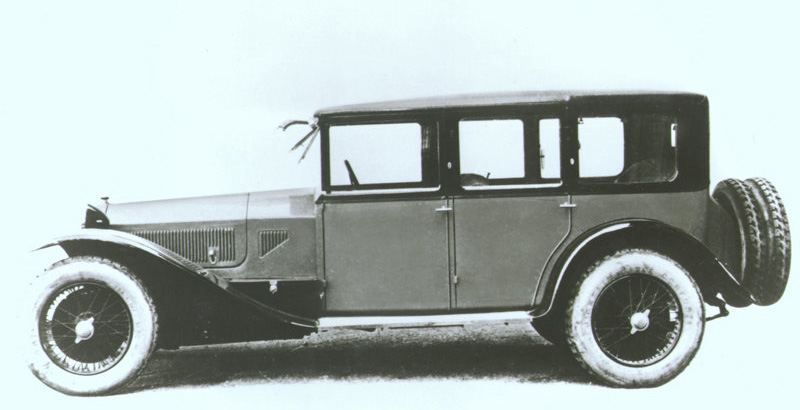
Lancia Lambda, 1926

 
Lancia Lambda, 1926

The Lancia Lambda was an innovative automobile produced from 1922 through 1931. It was the first car to feature a load-bearing monocoque-type body, and it also pioneered the use of an independent suspension (the front sliding pillar with coil springs). Lancia even invented a shock absorber for the car. Approximately 11,200 Lambdas were produced.

The narrow-angle aluminum Lancia V4 engine was also notable. All three displacements shared the same long 120 mm stroke, and all were SOHC designs with a single camshaft serving both banks of cylinders.

Engines

    * 2119 cc (75 mm bore, 13° vee), 49 hp (36.5 kW) at 3250 rpm
    * 2370 cc (79.37 mm bore, 14° vee), 59 hp (44 kW) at 3250 rpm
    * 2568 cc (82.55 mm bore, 13°40' vee), 69 hp (51.5 kW) at 3500 rpm
Related Posts Plugin for WordPress, Blogger...
Acura, Alfa-Romeo, Alpina, Artega, Ascari, Aston-Martin, Audi, BMW, Bentley, Brabus, Bugatti, Buick, Cadillac, Caparo, Chevrolet, Chrysler, Citroen, Covini, Dacia, Daewoo, Daihatsu, Daimler, Devon, Dodge, Donkervoort, Farbio, Ferrari, Fiat, Fisker, Ford, GM, GMC, Gumpert, Holden, Honda, Hummer, Hyundai, Infiniti, Italdesign, Jaguar, Jeep, KTM, Kia, Koenigsegg, Lamborghini, Lancia, Land Rover, Leblanc, Lexus, Lincoln, Lobini, Lotus, MG, Mansory, Maserati, Maybach, Mazda, Mazel, McLaren, Mercedes-Benz, Mercury, Mindset, Mini, Mitsubishi, Morgan, Nismo, Nissan, Noble, ORCA, Oldsmobile, Opel, PGO, Pagani, Plymouth, Pontiac, Porsche, Renault, Rolls-Royce, Rover, Saab, Saturn, Scion, Skoda, Smart, Spyker, SsangYong, Startech, Stola, Strosek, Torino, Subaru, Think, Toyota, Tramontana, Valmet, Vauxhall, Venturi, Volvo, Wiesmann, Yes, Zagato, Zenvo.