Showing posts with label 2009. Show all posts

Wednesday, December 26, 2012

BMW EfficientDynamics Concept, 2009


  •  BMW EfficientDynamics Concept, 2009

The BMW Vision concept car clearly demonstrates that the EfficientDynamics objectives are fully compatible when applied to a sports car. Conceived as a 2+2-seater with plug-in full-hybrid technology, the unique car combines the performance of a BMW M vehicle with a standard of fuel efficiency and emission management that exceeds even the current levels achieved by the latest small cars. The outstanding result is made possible by the combination of BMW ActiveHybrid components with an extremely economical combustion engine, and outstanding aerodynamic qualities.

BMW EfficientDynamics Concept is the result of a "clean-sheet" development process to ensure that the correct achievements were made in the areas of efficiency, driving pleasure, technology, and emotional design. BMW EfficientDynamics Concept is the most comprehensive implementation of the EfficientDynamics philosophy seen so far. The powertrain provides a top speed limited electronically to 155 mph, with acceleration to 100 km/h in 4.8 seconds. Average fuel consumption in the EU test cycle is 3.76 liters/100 kilometers, equal to 62.6 mpg, and the CO2 emission rating is 99 grams per kilometer. CO2 emission management is even more outstanding when driving in the all-electric mode after charging the battery from a plug-in source: Taking all emissions in the generation of electricity into account, as prescribed by the EU formula, the car's emission rating is just 50 grams per kilometer.
BMW EfficientDynamics Concept

The power and performance are made possible by combining a fuel-efficient 3-cylinder turbodiesel with one electric motor on each axle. The intelligent combination of these units, together with precisely controlled energy management, simultaneously enhances the dynamic performance and the efficiency of the car. Overall system output is 356 horsepower, and peak torque is 590 lb-ft. The special arrangement of the two motors and diesel engine allows all-wheel drive when driving in all-electric mode. The result is minimum power loss and a harmonious transmission of the power available under all conditions.

BMW EfficientDynamics Concept for the first time conveys the dynamic look of a BMW sports car to a hybrid vehicle. Developed with decades of experience in Motorsport, the body of this unique sports car is a result of intelligent lightweight technology and aerodynamic efficiency. In the design of the interior, the focus was likewise on both the fascinating driving experience and, in particular, on transparent, hands-on technology and maximum reduction of weight.

Turbodiesel engine with unprecedented specific output.
The combustion engine is a cutting-edge turbodiesel featured for the first time in the BMW EfficientDynamics Concept car. Displacing 1.5 liters on three cylinders, the engine consistently follows the downsizing principle of using a relatively small engine combined with a turbocharger to reduce fuel consumption.

Through its compact dimensions, the 3-cylinder fits conveniently in front of the rear axle like in an agile mid-engine sports car, despite the two seats at the rear. Fuel is injected by the latest generation of High Precision Direct Injection, and the turbocharger features variable intake geometry for maximum efficiency. Engine output is 163 hp with peak torque of 214 lb-ft.

The specific output of 109 hp per liter sets a new benchmark in diesel technology. The power delivered by the turbodiesel is conveyed to the rear axle by means of a double-clutch transmission (DCT). This advanced transmission technology, which already offers a particularly dynamic driving experience in BMW's M3 and Z4 Roadster, allows the driver to shift gears without the slightest interruption of power. BMW EfficientDynamics Concept features a newly-developed version of BMW's DCT with six speeds for maximum efficiency and flexibility.

Two electric motors for full-hybrid drive.
The combustion engine is supplemented by two electric motors. Consistently applying the BMW ActiveHybrid philosophy, development engineers followed the principle of "Best of Hybrid," choosing the optimum combination of a hybrid synchronous motor on the front axle and a full-hybrid system at the rear.

The driver benefits from the efficiency of the electric motors over a far wider speed range than with a conventional hybrid car. The rear axle comes with a second-generation full-hybrid system corresponding to the technology in the BMW ActiveHybrid 7 production model. The compact electric motor positioned between the diesel engine and the DCT outputs a consistent 33 horsepower and is able to reach a peak of up to 51 hp. Maximum torque for the rear electric motor is 214 lb-ft, the power, either supporting the diesel engine or in all-electric motoring.

The engine, a hybrid synchronous motor, offers continuous output of 80 horsepower and peak torque of 162 lb-ft. Extra power of 112 horsepower is available for a period of up to 30 seconds, and, for a 10-second "burst," the electric motor is able to develop 139 horsepower. The power is transmitted through a 2-stage, single-speed reduction gearbox.

BMW EfficientDynamics Concept is able to run completely under electric power, with the power of the turbodiesel engine alone, or through an infinite combination of the three power sources. Depending on driving conditions, the two electric motors may be used both for accelerating and for regenerating energy when applying the brakes and while coasting. This principle ensures efficient energy management, with the charge status of the lithium-polymer battery constantly remaining within the optimum range. When accelerating, the electric motors help to boost the car for even greater performance, ensuring immediate response and a significant reduction in fuel consumption. For a short time, such as in passing maneuvers, the cumulative maximum output of all three engines increases to 356 hp, with maximum torque generated by the three engines reaching 590 lb-ft.

The lithium-polymer battery for electrical energy.
The energy cells featured in BMW EfficientDynamics Concept are housed in a chassis element running from front to rear through the middle of the car. The front unit is the lithium-polymer complex, an ongoing development of the lithium-ion battery. Overall, BMW EfficientDynamics Concept comes with a total of 98 lithium-polymer cells, each offering a capacity of 30 amp/hours and developing continuous output of 600 Amps at a voltage of 3.7 V. For a period of 30 seconds, each cell is even able to develop maximum output of 1,200 Amps.

The serial arrangement of the lithium-polymer cells serves to generate nominal voltage of 364 volts, the gross storage capacity of the battery is 10.8 kW/h. With an unusually high discharge capacity of 80 percent, the battery delivers 8.6 kW/h for driving the car. This superior performance comes on overall weight of the entire energy storage system of just 187 lb. A further advantage is that through their optimum dimensions tailored to the specific qualities and features of the car, the lithium-polymer cells, together with the operating strategy chosen with a concept of "forward looking" energy management, reduces the thermal load acting on the battery to such an extent that there is no need for active cooling.

The Plug-in solution: convenient charging of the electric power system from a conventional power socket.
Brake Energy Regeneration captures electric power generated while driving without additional fuel consumption, which is subsequently used to supply power to the electric motors and on-board network. A further option is to connect the lithium-polymer cells to a conventional power socket for a simple and efficient charge process, using a plug-in connector in the front-right wing of the car. Connected to a standard EU power outlet (220 V, 16 Amps), the system requires a maximum of 2 ½ hours to fully charge the lithium-polymer cells. And wherever a power source with higher voltage and amperage (380 V, 32 Amps) is available, the charge time is an even shorter 44 minutes.

The Fuel efficiency and emission management opening new dimensions in hybrid technology.
The power delivered by the two electric motors and single diesel 3-cylinder engine gives the BMW EfficientDynamics Concept a level of performance superior to anything provided so far by a hybrid vehicle. Acceleration from a standstill to 100 km/h, for example, comes in just 4.8 seconds and the car could exceed its electronically-limited 155 mph top speed.

The fuel efficiency and emission management now reach a standard only achieved, if at all, by far less powerful small cars conceived for city traffic and short distances. Applying the criteria of the EU test cycle, BMW EfficientDynamics Concept offers average fuel consumption equal to 62.6 mpg. CO2 emissions, in turn, are 99 grams per kilometer. These consumption and emission figures are measured on a consistent internal power balance, meaning that the batteries and storage media for electrical energy maintain the same charge level throughout the entire test cycle (with the same level at the beginning and end) and are charged while driving only by the car's on-board systems.

As a plug-in hybrid, BMW EfficientDynamics Concept is able to cover the entire drive cycle for measuring fuel consumption also with its combustion engine completely switched off. Then, to subsequently charge the lithium-polymer cells to the same status as when setting off, all the driver has to do is connect the car to an external power grid. To determine the consumption of electric power, the only requirement is to compare the charge level of the battery before and after the test cycle. Applying this measurement process, the BMW EfficientDynamics Concept car consumes 17.5 kW/h per 100 kilometers, equal to a CO2 emission rating of just 50 grams per kilometer in the EU test cycle.

To determine the total volume of CO2 emissions when driving in the all-electric mode, new legal standards for measuring the level of fuel consumption are currently being prepared for hybrid and electric cars with a plug-in power supply. Applying this calculation method, the CO2 emission ratings generated by BMW EfficientDynamics Concept are reduced further to just one-third of the original figure of 99 grams per kilometer. Clearly, this significant reduction of emissions opens up a new dimension in BMW's EfficientDynamics development strategy in this unique concept car.

Aerodynamic qualities reflecting BMW's Motorsport experience.
BMW EfficientDynamics Concept also takes a new approach in its design and streamlining, the body and the interior clearly expressing the unique combination of supreme efficiency and the sporting performance of the brand. Following BMW's design language, this concept car visualizes both highly efficient aerodynamics and intelligent lightweight construction.

In its design, BMW EfficientDynamics Concept differs from the usual low-emission car concepts. The principle of "form follows function" is not just for the overall look of the car, but embraces each and every detail. Measuring 48.8" in height and boasting a sweeping, arch-like roofline, BMW EfficientDynamics Concept offers the slender silhouette of a classic Gran Turismo. With the combustion engine fitted in front of the rear axle, the designers have succeeded in giving the car a very low front end, with the flow of air being further smoothened by active louvers in front of the radiator, which close completely when the need for cooling air is low. This efficient function follows in the footsteps of the active air flap control already used as a feature of BMW EfficientDynamics in some of BMW's current production models. As a further highlight, BMW EfficientDynamics Concept guides air smoothly and exactly as required into the car through an active air intake at the front.

Numerous details in the design of the body are based on the know-how BMW has gained in Motorsport, a number of body elements serving as air deflectors and guide vanes. Designed as ducts, for example, the A-pillars serve to channel the flow of air in the same way as the rear lights with their wing profile. The floor of the car is fully covered from front to rear and from one side to the other, thus maintaining a smooth surface to avoid any air swirl liable to increase fuel consumption. Slender openings around the front air dam guide the air flowing specifically into two closed ducts leading inside the front air dam to the wheel arches where the air comes out again through a very slim aperture at high speed, flowing just next to the outer wheel flanks. This air jet rests on the front wheels like a curtain and is therefore referred to most appropriately as the "air curtain." It provides a highly stabilizing effect.

Overall vehicle concept for a drag coefficient of just 0.22.
To further optimize the aerodynamic qualities of the entire vehicle and keep rolling resistance to a minimum, BMW EfficientDynamics Concept comes with tires and wheels of quite unusual size on a sports car. The tires measure 195/55, while large 21-inch wheels provide a contact surface on the road otherwise offered only by a much wider tire. In combination with the sophisticated axle geometry, this ensures agile driving behavior.

The extra-large wheel covers extending over part of the tire flanks add to the unique, very different look of BMW EfficientDynamics Concept from the side. The blade profile integrated in the wheels serves furthermore to reduce the negative effect of the turning wheels on the overall aerodynamics of the car. In all, these features optimizing the aerodynamic qualities of the car give the BMW EfficientDynamics Concept car a very low drag factor (CX) of just 0.22.

Technological look as a strong impression of intelligent lightweight construction.
In both exterior and interior design, BMW EfficientDynamics Concept stands out clearly as a strong spearhead in technology. Many components of the vehicle are presented in full view expressing the "transparent" character of the car as a powerful visual feature of lightweight technology. The chassis and suspension of BMW EfficientDynamics Concept are made completely of aluminum; the roof and the outer skin on the doors are made almost completely of a special polycarbonate glass automatically darkening as a function of the light shining on the car.

Measuring 181.1" in length, 74.8" in width and 48.8" in height, this unique concept car offers ample space for up to four passengers and their luggage. Thanks to the consistent lightweight construction strategy applied on the car, curb weight is 3,076 lb, with the center of gravity remaining very low. In its power-to-weight ratio, the BMW EfficientDynamics Concept car is far superior to all other hybrid cars, achieving the same standard as extremely dynamic sports cars with a conventional combustion engine.

Carrying a maximum payload of 981 lb, this unique 2+2-seater is fully suited for everyday traffic. Luggage capacity of 5.3 cu ft, in turn, allows the driver and passengers to conveniently take along two golf bags. And to meet additional loading requirements the backrests of the two rear seats may be tilted down individually to provide extra storage space.

Emotional design through sculptural shapes and layering technology.
Reflecting the innovative drive concept of this unique car, the design of BMW EfficientDynamics Concept likewise takes a new approach in combining functional progress with a most powerful emotional impact.

This has been achieved through the close cooperation of BMW's Design and Technical Development Divisions starting at an early point and continuing consistently throughout the entire development process. The result is a brand-new vehicle architecture with the drive components as well as the body and interior elements perfectly coordinated and matched to one another with maximum flexibility and individual style.

A fully integrated design philosophy also provided new options in using harmonized design principles connecting the exterior and the interior and providing an interacting effect between the two areas.

Sculptural design language giving BMW EfficientDynamics Concept a fully harmonized, complete look ensures the proportions typical of a BMW sports car. The front, side, rear and roof areas, for example, flow smoothly into one another. Dynamically contoured surfaces and shapes, in turn, create highly attractive light and shade effects accentuating the light and sporting character of the car in an emotional manner.

Layering technology developed by the BMW Group Design Division acts as the fundamental guideline in designing the exterior and interior. Applied for the first time in exterior design, this technology layers one surface on top of the other, creating very smooth seams and joints to reduce the number of components and, accordingly, the weight of the car. As a result, BMW EfficientDynamics Concept meets the most demanding aerodynamic requirements without using any additional body elements, simply through the structure of the surfaces optimized for a smooth flow of air.

Interior: innovative lightweight construction and unprecedented orientation to the driver.
Innovative layering technology provides an unprecedented symbiosis of function and stylish shapes intentionally reduced to a minimum, consistently implementing and visualizing the lightweight principle also inside the car.

Specific components such as the central air vent not only serving to enhance motoring comfort but also acting as part of the cockpit, perform several functions in one. This multi-functionality is then presented visibly within the car, the use of particularly sophisticated materials providing a highly attractive combination of innovation in technology and quality clear to the eye and the touch of the surface.

This interaction of lightweight construction and individual well-being also comes out clearly in the design of the controls and switches, with a leather band, for example, running round the aluminum gear selector lever on the center console. Materials combining lightweight technology and all the qualities required are also to be admired all round the cockpit of BMW EfficientDynamics Concept, giving the car an unusually generous feeling of space for a 2+2-seater. The body-contoured seats, for example, are made up of a kevlar shell, a backbone structure, and seat padding with personalized fillings. Clearly, this combination alone ensures comfort at a minimum weight. The driver's and front passenger's seats are connected firmly to the center console to form a joint interior "landscape", while the rear seats anchored on the floor would appear to be hovering in space. Natural materials and light colors on the seat upholstery and all interior linings underline the light, sophisticated and sustainability-oriented atmosphere within the passenger compartment.

The instrument panel is deliberately padded only where technical components have to be appropriately covered, thus making an important contribution to passenger safety in the event of a collision. The instrument cluster played a fundamental role right from the start in the design process, serving as the starting point for all surfaces within the interior and thus creating a particularly powerful rendition of that driver orientation typical of BMW.

Innovative light technology: providing clear signals to the outside and offering soothing ambient illumination inside in a unique symbiosis.

LED lights at both the front and rear end of BMW EfficientDynamics Concept provide an innovative combination of the symbols typical of the brand and clear design language oriented towards trendsetting technology. The distinctive look of the dual round headlights characteristic of a BMW is emphasized in particular by the use of LED technology. The rear lights are integrated also in their function into the design of the entire rear section, forming part of the rear air deflector and thus merging completely into the rear contour.

Extremely flat and compact, the rear lights are made up of innovative LED units forming a smooth and consistent red surface when not in use. Only when used do the respective light chambers take on the appropriate color such as yellow on the direction indicators. This innovative light technology also provides an intense symbiosis of the exterior and interior, again promoting and further refining the driving experience.

This is also why the ambient illumination of the interior comes with new features and qualities, the light sources within the passenger compartment being fed from the positioning lights at the side, the rear lights and the brake lights, thus changing the atmosphere created by the lights within the car as a function of driving conditions.

The optical impression conveyed by BMW EfficientDynamics Concept also results in other areas from the symbiosis of the exterior and interior, eliminating the conventional barriers between the two. The lines within the interior, for example, continue on to the innovative design of the engine compartment lid, while in its shape the third brake light positioned higher up on the car follows the structure of the glass roof and tapers to the outside where the roofline moves down gently to the rear.

Overhead doors for convenient access to all seats.
The doors on BMW EfficientDynamics Concept open up like bird's wings, turning on pivots in the front roof column at the level of the side direction indicators. Since the car has no B-pillars, the large door cutouts ensure convenient entry also to the rear seats. The pivots on the doors also provide the base for the exterior mirrors, thus forming an ideal combination of function and aesthetic design. The structure of the doors is also characterized by several layers of materials on top of one another and the optical and functional symbiosis of the interior and exterior this technology is able to offer. Made up of three layers, the overall structure comprises the outer glass surface, an interim load-bearing layer, and the interior cover with its particularly smooth shapes and fl owing forms clearly visible to the passengers, layering technology again, therefore, opening up new perspectives.

The large glass surfaces extending far down on the body also provide a strong optical impression of the low seating position close to the road. And at the same time a stable sidebar ensures the body stiffness and crash safety naturally required on every vehicle. Flowing to the inside at its central point, this safety element also serves as an armrest. This interplay of the three layers also helping to minimize the weight of the car continues on the trim bar running along the door and extending out of the armrest, finally flowing into the outer door opener on its path from inside to outside.

Bentley Continental Flying Spur, 2009


  •  Bentley Continental Flying Spur, 2009

The new Bentley Continental Flying Spur is set to deliver even greater levels of refinement, comfort and opportunities for customer personalisation. The class-leading 12-cylinder luxury saloon will also be joined by the 600 bhp (610PS) Bentley Continental Flying Spur Speed. The most powerful 4-door car ever produced by the British manufacturer, the Bentley Continental Flying Spur Speed offers the pure driving experience and uncompromising performance synonymous with all Bentleys bearing the Speed legend.

The Bentley Continental Flying Spur has been an extraordinary success story for Bentley since its launch in 2005. Its unrivalled combination of exciting performance, luxury, craftsmanship, style and four-door practicality has broadened the appeal of the Continental range. The Bentley Continental Flying Spur has become the most successful 12-cylinder luxury saloon in the world and has played a pivotal role in the revitalisation of Bentley.

The instantly recognisable style of the Bentley Continental Flying Spur undergoes a subtle evolution with changes to the front and rear design. The new, more upright grille and bolder lower air intake accentuate the distinctive Bentley profile, while the new rear bumper delivers a more aggressive and sleek appearance.

A comprehensive range of noise-absorbent measures including acoustic glazing, tri-laminate body undertrays and wheelarch liners ensure that cabin refinement, already a hallmark of the Bentley Continental Flying Spur, is best in class.
Bentley Continental Flying Spur

The new Bentley Continental Flying Spur may now be specified with a sophisticated follow-to-stop, radar-based Adaptive Cruise Control system, which monitors traffic ahead and manages the throttle and brakes to maintain a pre-set time gap, up to a driver selected set speed.

As a further option, the new Naim for Bentley audio system provides the world's best in-car sound stage. Designed exclusively for Bentley by Naim, the renowned British hi-fi manufacturer, the system features an 1100 Watt amplifier, the most powerful unit offered in a production car, and 15 custom-built Naim speakers, including dual Naim sub-woofers. The next-generation Digital Signal Processor further enhances the listening experience.

The aluminium-intensive suspension of the Bentley Continental Flying Spur features revised spring and dampers and a new bespoke 19-inch Pirelli UHP tyre for outstanding levels of ride quality, comfort and refinement.

Bentley's commitment to the highest quality of craftsmanship and customer personalisation is highlighted with an enhanced choice of beautifully crafted wood marquetry and chrome inlays. In addition, seat piping, a traditional Bentley feature, is introduced on Bentley Continental Flying Spur together with two new hide colours. Three new colours and four duo-tone paint combinations are added to the exterior paint palette.

The 600bhp Bentley Continental Flying Spur Speed unleashes the same potent performance and intense levels of driver engagement as its highly acclaimed stablemate, the Bentley Continental GT Speed.

Inspired by Bentley's legendary 'Speed' models that first appeared in 1923, the Bentley Continental Flying Spur Speed offers a range of headline performance figures including a 0-60mph sprint time of 4.5 seconds and a top speed of 200mph.

Audi e-tron Concept, 2009

 
  •  Audi e-tron Concept, 2009

Audi presents the highlight of the IAA 2009: the Audi e-tron Concept, a high-performance sports car with a purely electric drive system. Four motors - two each at the front and rear axles - drive the wheels, making the concept car a true quattro. Producing 230 kW (313 hp) and 4,500 Nm (3,319.03 lb-ft) of torque, the two-seater accelerates from 0 to 100 km/h (0 - 62.14 mph) in 4.8 seconds, and from 60 to 120 km/h (37.28 - 74.56 mph) in 4.1 seconds. The lithium-ion battery provides a truly useable energy content of 42.4 kilowatt hours to enable a range of approximately 248 kilometers.

The performance figures are by no means the only evidence of the consistent and holistic strategy. The design makes it clear that the Audi e-tron Concept belongs in the major leagues of sports cars, and the package takes into account the specific realities of an electric vehicle. The battery is directly behind the passenger cabin for an optimal center of gravity and axle load distribution.

The Audi e-tron Concept is able to freely distribute the powerful torque of its four electric motors to the wheels as required. This so-called torque vectoring allows for dazzling dynamics and an undreamed-of level of agility and precision when cornering.

Audi has taken a new and in some cases revolutionary approach to many of the technical modules. A heat pump is used to efficiently warm up and heat the interior. The drive system, the power electronics and the battery are controlled by an innovative thermal management system that is a crucial component for achieving the car's range without compromising its high level of interior comfort. Networking the vehicle electronics with the surroundings, which is referred to as car-to-x communication, opens new dimensions for the optimization of efficiency, safety and convenience.

The Concept
Electric drive systems are still very much outsiders. The first vehicles of this type took to the roads around 1900, yet in 2009 no volume car manufacturer has a car powered exclusively by batteries in its lineup. Fewer than 1,500 electric vehicles are currently registered in Germany, corresponding to only 0.035 percent of all registered vehicles.

Yet electric driving potentially offers numerous advantages. Electric cars reduce the dependence of transportation and the economy on the raw material petroleum. They produce no direct exhaust emissions and thus ease the local burden on the environment. Electric drive systems are also significantly more efficient than combustion engines, consequently making them easier on the customers' wallets. Other strengths include sportiness and the fun they bring to driving. All of the torque is essentially available the moment the driver steps on the accelerator, allowing for breathtaking acceleration.

There is still a lot of work to do before electric cars are ready for volume production, however. The greatest challenge is the integration of the energy storage system. Acceptable range and performance requires a traction battery that is heavy and takes up a lot of space. Audi is taking a new approach to offset these disadvantages - a holistic approach with a specific vehicle package, a systematic lightweight construction concept and an optimal configuration of all components for the electric drive.

Audi e-tron Concept - The Holistic Approach
The most important development related to batteries for electric drives are lithium-ion cells. Numerous experts throughout the world are working on their further development for use in cars, with the primary objectives being to reduce weight and increase capacity and performance. Audi has also opted for this technology, both for use in a hybrid production vehicle, such as the upcoming Q5 hybrid, and in the e-tron test platform.

The requirement specification for the concept vehicle goes far beyond battery technology and the replacement of the combustion engine with an electric drive system, however. The Audi development engineers decided back in the concept phase to design practically every component and technology based on the new requirements of electric mobility. The interaction of all elements has a decisive influence on the factors efficiency, range and practicality.

The Audi team therefore focused its attention on the total vehicle, which is reflected in the comprehensive requirement specification.
  • The reduction of road resistances and the resulting increase in range plays a major role with electric vehicles. Lightweight construction was therefore a top priority for the Audi e-tron Concept car. The body, in particular, combines low weight with supreme strength and rigidity. An intelligent aerodynamics concept with active elements helps to reduce consumption.
  • The package ensures the safe integration of the electric drive system and the battery. Placing the battery in front of the rear axle ensures an optimal axle load distribution without compromising the compact overall design and the generous amount of interior space.
  • Advanced battery technology enables a practical range. The battery system is water-cooled for optimal performance and service life.
  • A needs-based energy management system controls all functions for the chassis, convenience equipment and other auxiliary consumers.
  • The innovative thermal management system with optimally matched cooling and heating components considers the cooling requirements of the battery and the drive system in addition to the interior temperature.
  •  Driving dynamics and road comfort are what Audi customers have come to expect in the sports car segment.
  • Vehicle safety is on par with the best of today's production vehicles.
  • The driver is provided with clear and comprehensive information.
  • The Audi e-tron Concept car uses car-to-x communication technology developed by Audi to improve the efficiency of conventionally powered vehicles. For example, information about traffic light cycle times and the flow of traffic - provided by the infrastructure and other vehicles - is used to compute an optimal driving strategy. Audi has already modeled such a solution in Ingolstadt as part of its "travolution" project.

Design and Package
The caliber of the car is apparent to the observer at first glance. The Audi e-tron Concept has a wide, powerful stance on the road. The car body seems almost monolithic; the closed rear end appears powerful and muscular. The trapeze of the single-frame grille dominates the front end and is flanked by two large air intakes. The top of the grille merges into the flat strips of the adaptive matrix beam headlamp modules with their clear glass covers. High-efficiency LED technology is used for all lighting units - a matter of honor for Audi as the worldwide pioneer in this field.

The headlamps are the core of a fully automatic light assistance system that reacts flexibly to any situation. The new technology recognizes weather conditions and adapts the illumination to rain or fog. The technology at the heart of the light assistance system is a camera that works together with a fast computer to detect oncoming traffic, recognize lanes and measure visibilities, such as in the event of fog.

If there is oncoming traffic, for example, the high beams are turned off in the corresponding section of the illumination field. The cornering light system analyzes data from the navigation system and illuminates corners before the driver steers into them. The Audi e-tron Concept does not have conventional fog lamps that consume additional power. It instead intelligently varies the low beams to widen the illumination field, thus significantly reducing the glare from the car's own lights.

The variability of the headlamps is also reflected in their design. The LED elements change appearance and thus the character of the front end of the vehicle depending on the speed driven and the ambient conditions. The innovative lighting technology offers the Audi designers almost as much design freedom as the shape of the body does.

A new design element unique to the Audi e-tron Concept are the air intakes in the single-frame grille and in front of the rear wheel wells. They are closed flush under normal circumstances and opened by means of flaps when additional cooling air is required. Maximum efficiency is also the reason behind this measure. The concept car has a remarkably low drag coefficient, which gets even better when the flaps are closed.

The vehicle body is compact. The sweeping line of the front end and the flat curved roof immediately identify the two-seater as an Audi. The contours of the flanks are familiar. The tapering of the dynamic line above the sill and the shoulder line tie together the front end, the side and the rear, lend a plastic quality to the doors and the transition to the side air intake and sharply emphasize the Audi-typical round wheel wells with the large, 19-inch tires.

1.90 meters (74.80 in) wide, just 4.26 meters (167.72 in) long and 1.23 meters (48.43 in) tall - those are the proportions of a supercar. The wheelbase of 2.60 meters (102.36 in) leaves plenty of room between the axles for people and technology. Like with a mid-engined sports car, the cabin of the Audi e-tron Concept is shifted far forward toward the front axle, leaving room in front of the rear axle for the roughly 470 kilogram (1036.17 lb) battery unit, the inverter and the power electronics.

The two electric motors, which have their own cooling system, are mounted behind the rear axle. The front electric motors are mounted on the front axle, with their cooling system arranged in front of them. This special package, which features a 42:58 weight distribution, ensures perfect balance, which contributes to the driving dynamics of the Audi e-tron Concept.

Systematic lightweight construction is an even more important prerequisite for efficiency and range with electric vehicles than for conventionally powered automobiles. The Audi development engineers drew on the core competence of the company for the Audi e-tron Concept. The body structure is based on Audi Space Frame (ASF) technology and was realized as a hybrid construction. All add-on parts - doors, covers, sidewalls and roof - are made of a fiber-reinforced plastic.

The combination of aluminum and carbon fiber-reinforced composite material guarantees supreme rigidity coupled with low weight. Audi will soon use this technology in a similar form for production vehicles. Despite the complex drive system layout with four electric motors and a high-capacity battery system, the total weight of the Audi e-tron Concept is only around 1,600 kilograms (3527.40 lb).

Interior and Control Concept
Optical and functional references to the new drive concept characterize the interior design. They establish an advanced connection between proven Audi genes and new formal hallmarks. Typical for the Audi design language is the reduction of the architecture, controls and flow of information to the essential in favor of visible lightweight construction and a tidy overall impression.

The dash appears to float and has a curve that extends laterally into the door panels. With no need to allow for a transmission, shifter and cardan tunnel, the designers took advantage of the opportunity to create a particularly slim and lightweight center tunnel and center console. The flush gear selector, with which the driver chooses between the modes forward, reverse and neutral, emerges from the tunnel when the vehicle is started.

The cockpit of the Audi e-tron Concept is also oriented toward the driver - a further characteristic Audi trait. Instead of the classic instrument cluster, the concept car is the first Audi to be equipped with a large, fold-out central display with integrated MMI functions. It is flanked by two round dials.

The MMI is controlled via a scroll pad with a touch-sensitive surface on the steering wheel ("MMI touch") - an element inspired by modern smartphones.

While an analog speedometer on the right provides speed information, the instrument on the left tells the driver how much power is being drawn. The central display shows the range in the status bar and presents all key information from the infotainment and navigation systems. It also provides the driver with relevant data from the vehicle's communication with its surroundings. The instruments combine the analog and the digital worlds into a single unit.

Characteristic for the concept of the Audi e-tron Concept is the near total elimination of switches and small components such as the ignition. The climate control unit is located to the right above the steering wheel. The display provides temperature and ventilation information. Again drawing inspiration from a smartphone, the system is controlled by means of a touch-sensitive sliding control.

The racing-inspired lightweight bucket seats combine excellent lateral support with comfort. To contrasting colors - snow white and cognac - delineate the various zones of the interior. The colors and the high-quality materials combine elegance and sportiness.

Drive System and Energy Supply
Four asynchronous motors with a total output of 230 kilowatts (313 hp) give the Audi e-tron Concept the performance of a high-output sports car. The concept car can accelerate from 0 to 100 km/h (0 - 62.14 mph) in 4.8 seconds if necessary, and goes from 60 to 120 km/h (37.28 - 74.56 mph) in 4.1 seconds. The torque flows selectively to the wheels based on the driving situation and the condition of the road surface, resulting in outstanding traction and handling.

The top speed is limited to 200 km/h (124.27 mph), as the amount of energy required by the electric motors increases disproportionately to speed. The range in the NECD combined cycle is approximately 248 kilometers (154 miles). This good value is made possible by the integrated concept: technology specially configured for the electric drive system combined with state-of-the-art battery technology. The battery block has a total energy content of roughly 53 kilowatt hours, with the usable portion thereof restricted to 42.4 kWh in the interest of service life. Audi uses liquid cooling for the batteries.

The energy storage unit is charged with household current (230 volts, 16 amperes) via a cable and a plug. The socket is behind a cover at the back of the car. With the battery fully discharged, the charging time is between 6 and 8 hours. A high voltage (400 volts, 63 amperes) reduces this to just around 2.5 hours. The Audi engineers are working on a wireless solution to make charging more convenient. The inductive charging station, which can be placed in the garage at home or also in special parking garages, is activated automatically when the vehicle is docked. Such technology is already used today in a similar form to charge electric toothbrushes.

The battery is charged not only when the car is stationary, but also when it is in motion. The keyword here is recuperation. This form of energy recovery and return to the battery is already available today in a number of Audi production models. During braking, the alternator converts the kinetic energy into electrical energy, which it then feeds into the onboard electrical system.

The Audi e-tron Concept, which is slowed by four lightweight ceramic brake discs, takes the next large step into the future. An electronic brake system makes it possible to tap into the recuperation potential of the electric motors. A hydraulic fixed-caliper brake is mounted on the front axle, with two novel electrically-actuated floating-caliper brakes mounted on the rear axle. These floating calipers are actuated not by any mechanical or hydraulic transfer elements, but rather by wire ("brake by wire"). In addition, this eliminates frictional losses due to residual slip when the brakes are not being applied.

This decoupling of the brake pedal enables the Audi e-tron Concept's electric motors to convert all of the braking energy into electricity and recover it. The electromechanical brake system is only activated if greater deceleration is required. These control actions are unnoticeable to the driver, who feels only a predictable and constant pedal feel as with a hydraulic brake system.

Making its Automotive Debut: The Heat Pump
The heat pump - used here for the first time ever in an automobile - also serves to increase efficiency and range. Unlike a combustion engine, the electric drive system may not produce enough waste heat under all operating conditions to effectively heat the interior. Other electric vehicles are equipped with electric supplemental heaters, which consume a relatively large amount of energy. The heat pump used by Audi - and commonly used in buildings - is a highly efficient machine that uses mechanical work to provide heat with a minimum input of energy.

A high-efficiency climate control system is used to cool the interior. It works together with the thermal management system to also control the temperature of the high-voltage battery. The battery, the power electronics and the electric motors must be kept at their respective ideal operating temperatures to achieve optimal performance and range.

As soon as the vehicle is connected to a charging station the vehicle is preconditioned as appropriate by the thermal management and other associated systems.

The drive system is heated if temperatures are cool, and cooled if hot. This preconditioning can also be extended to the interior, if necessary, so that the passengers can step into a cabin that has been heated or cooled as appropriate for their comfort.

Driving Dynamics
The normal distribution of the tractive power is clearly biased toward the rear axle in accordance with the weight distribution of the Audi e-tron Concept. Similarly to a mid-engined sports car, roughly 70 percent of the power goes the rear and 30 percent to the front. If an axle slips, this balance can be varied by means of the four centrally controlled electric motors. The electric vehicle from Audi thus enjoys all of the advantages of quattro technology.

The four individual motors, which in the interest of greater traction are installed behind the wheels as wheel drives, also enable the Audi e-tron Concept's lateral dynamics to be intelligently controlled. Similar to what the sport differential does in conventional quattro vehicles, torque vectoring - the targeted acceleration of individual wheels - makes the Audi e-tron Concept even more dynamic while simultaneously enhancing driving safety. Understeer and oversteer can be corrected by not only targeted activation of the brakes, but also by precise increases in power lasting just a few milliseconds. The concept car remains extremely neutral even under great lateral acceleration and hustles through corners as if on the proverbial rails.

The chassis has triangular double wishbones at the front axle and trapezoidal wishbones made of forged aluminum components at the rear axle - a geometry that has proven in motorsports to be the optimal prerequisite for high agility, uncompromising precision and precisely defined self-steering behavior. A taut setup was chosen for the springs and shock absorbers, but it is still very comfortable.

The direct rack-and-pinion steering gives finely differentiated feedback. Its electromechanical steering boost varies with speed, so that the Audi e-tron Concept only has to provide energy while steering, and not while driving straight ahead.

As befitting its status, the Audi concept car rolls on 19-inch tires with a new blade design. 235/35 tires up front and 295/30 tires in the rear provide the necessary grip.

Car-to-x Communication
The electronics development engineers at Audi not only aimed to make the Audi e-tron Concept as efficient and fun to drive as possible, they were also very concerned with safety and traffic management. The technical concept car includes a prototype of an information processing system. Future generations of these systems will usher in a new era in the networking of road traffic, particularly in regions and countries with a high volume of traffic. This progress is made possible by the rapid advancements in computing power, software and communication technology.

The buzzword "car-to-x communication" refers to the direct exchange of information in flowing traffic and to the traffic environment. The letter "x" is a free variable that can refer just as easily to other vehicles as to fixed infrastructure such as traffic lights. In contrast to today's telematic systems, car-to-x communication no longer requires a central service provider to quickly and effectively pool and process information. The participants themselves perform these tasks by spontaneously networking with one another.

The future car-to-x network still needs some time before it becomes reality on the roads. This obstacle is one that can be overcome, however, as nearly every carmaker in Europe, the U.S.A. and Japan has decided to develop a common standard for hardware and software. Once all new cars are equipped with this technology, a functional network of automotive transmitters will soon be available, at least in large population centers.

These transmitters can be used to open up many new practical applications. Below are just four examples showing the possibilities offered by car-to-x communication.

Example 1 - Efficiency and range: Numerous external factors influence energy consumption and thus the range of any vehicle. An intelligent vehicle equipped with car-to-x technology is aware of necessary braking or acceleration maneuvers in advance because it combines navigational data with information about the flow of traffic, for example. The central computer can prevent driver actions that would use energy unnecessarily or use targeted braking for recuperation of the battery.

Example 2 - Safety: A vehicle has spun out on a slippery road in a blind curve and is unable to free itself under its own power. At the same time, other vehicles are approaching quickly. The stuck vehicle uses car-to-x to send out a warning signal reporting the precise location of the hazardous location. A corresponding warning then appears on the navigation system display of the approaching cars.

Example 3 - Traffic flow: Many cars are traveling between traffic lights on an arterial road. Over and over again, they accelerate only to have to brake again when the traffic light changes to red. Car-to-x technology enables them to establish a network between themselves and receive information from the traffic light controller. The drivers can then make more judicious use of the gas pedal because they know what to expect. The same applies for imminent traffic jams: cars ahead provide information that results in adjustments to the posted speed limits, noticeably spreading out the traffic.

Example 4 - Convenience: The driver has entered a shopping center with a chronic shortage of parking spaces into his navigation system as the destination. With car-to-x, the mobile system networks with the parking space registration system at the destination. When the system in the parking garage reports that a convenient parking spot is available, the navigation system can register its location and also reserve the spot.

Monday, December 17, 2012

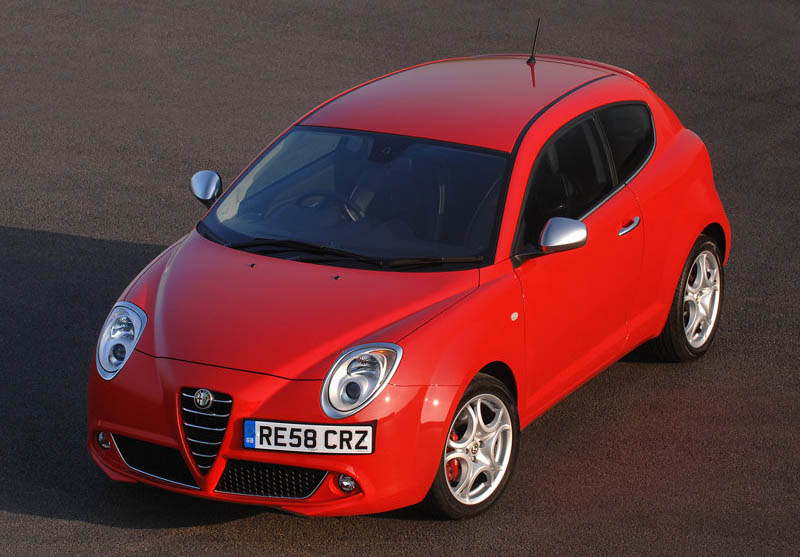
Alfa Romeo MiTo UK Version, 2009


  •  Alfa Romeo MiTo UK Version, 2009

With design cues taken from the stunning Alfa Romeo 8C Competizione, and only available as a 3-door hatchback, the new Alfa Romeo MiTo is styled to match its description as the sportiest compact car on the market today.

From all angles, the Alfa Romeo MiTo manages to blend its sports credentials with typical Alfa Romeo style and sophistication to create a compact car that expresses the vitality and emotion of the brand.

Front on, the new addition to the range is every inch an Alfa Romeo. The instantly recognisable shield-shaped grille denotes the lineage of the Alfa Romeo MiTo and the shape of the bonnet and the headlamps pay homage to the Alfa 8C Competizione.

STYLISH AND COMFORTABLE
Inside the Alfa Romeo MiTo, it's clear to see that the sporty theme has been maintained.

Throughout the interior, a combination of precision materials, smart upholstery and top levels of build quality, plus neat finishing touches, make the cockpit a cosseting and welcoming environment.

The simply laid-out satin-chrome central console - home to the RDS stereo radio and MP3-compatible CD player - combined with the four air vents, tactile dashboard and the hooded driver instruments housing MPH, RPM, fuel and water temperature gauges - create a high quality interior that is complemented by a choice of dashboard colours and matching seat upholstery.

Dependent on trim level, the driver can choose a dashboard colour - Sprint Black, Sprint Red, Competizione Blue, Competizione Red or Black.

The trim colour is extended to the driver and passenger door panels and complementary seat fabrics.

Controls for the heating and ventilation system are positioned in front of the gearlever on the central console. Across the range, all Alfa Romeo MiTo versions come with manual air conditioning as standard, plus the option of automatic dual-zone air conditioning.

Behind the wheel, the driver benefits from a rake and reach-adjustable steering wheel. Lusso and Veloce versions feature a leather steering wheel, gearlever and handbrake grip.

The three-position DNA switch is located beside the gear lever. The driver is reminded which function has been selected with a digital letter designation on the dashboard alongside a read-out for time, outside temperature and turbo pressure. Turismo and Lusso models get red-on-black dials while the Veloce trim features white on black dials.

On certain models, chrome kick plates, floor mats and a front armrest represent an executive touch, and the option of chrome sports pedals hints further at the sporty lineage of the Alfa Romeo MiTo.

Tilting and sliding front seats make rear passenger access easy and comfortable and, unlike some competitors, there's plenty of head, leg and elbow room in the back seats for two full-size adults.

Radio and Hi-Fi system
A young audience attracted to the Alfa Romeo MiTo's stylish and modern look will take in- car entertainment seriously. For that reason, the new Alfa Romeo MiTo includes a sophisticated RDS radio with CD and MP3 file player, and two sound system levels.

The first sound system comes complete with six speakers (two mid-woofers with a power rating of 40W, two 40W full range speakers and two 30W tweeters), while the higher level comes with eight speakers (four subwoofers with a power rating of 40 W and four 30W speakers).

Significantly, for the first time in its segment, the Alfa Romeo MiTo becomes available with a double antennae tuner fitted with a twin aerial for up to 80% better reception.

Built into the design of the dashboard and laid out in user-friendly fashion, the controls for the radio, CD and MP3 player are easily accessible to the driver and front seat passenger.

On Lusso and Veloce models, the sound system can be managed using steering wheel controls.

The radio comes with RDS (Radio Data System), TA (traffic news), and PTY (a code used by radio stations to indicate the type of music played so that the set can automatically select the type of music preferred by the listener).

Every time the radio is switched on, the volume settings remain the same as when it was switched off, while another device automatically corrects sound imbalance on the basis of road speed. The customer can also choose between seven equalisation bands for personal setting of sound parameters.

In addition, the Alfa Romeo MiTo radio may be connected both to the Blue&Me™ system - standard on Veloce versions and an option on the rest of the range - plus an optional Bose Sound System.

ALL MOD CONS - The Alfa Romeo MiTo Range
The entire Alfa Romeo MiTo range is extremely well specified and, in some areas, class leading. The inclusion of Alfa Romeo's DNA system, LED rear lights and the highest Euro NCAP safety rating reinforce MiTo's keen pricing and exceptional value.

TURISMO
The standard specification list is long and comprehensive, featuring Alfa's advanced DNA function along with the Q2 system and electric power assisted steering. In addition, this model is fitted with Vehicle Dynamic Control - an amalgamation of ABS, Anti Slip Regulation and Brake Assistant - plus Hill Holder as standard.

Other safety features include driver, passenger, front side, window and driver's knee airbags, along with fast-reaction LED rear lights and a fire prevention system. The front passenger airbag can also be deactivated.

The LED rear lights complement the height adjustable follow-me-home headlights with titanium grey surrounds, electrically adjustable and heated colour-coded door mirrors and bumpers.

All Alfa Romeo MiTo Turismo versions come with 16" wheels with unique design trims and 195/55 tyres.

Inside the cabin, driver and passengers benefit from manual air conditioning, electric one-touch window operation plus an RDS radio with CD and MP3 reader. There's also an 'auto-close' system to complement the Alfa code immobiliser and alarm system.

Drivers can choose two different cabin colours. A Sprint Black dashboard is complemented by black / grey cloth and a Sprint Red dashboard comes with a black / red cloth combination.

LUSSO
From the outside, Lusso versions can be distinguished from Turismo by their fog lights, chrome headlamp surrounds, chrome-effect window surrounds and chrome exhaust pipes. The Alfa Romeo MiTo Lusso also differentiates itself from the rest of the range by sporting 16" alloy wheels.

Stepping over the chrome kick plates, the interior of Lusso models can feature a choice of three different interior colour combinations.

Competizione Blue, Red or Black dashboards can be complemented by the inclusion of five different cloth seat colour combinations. All Lusso models come with lumbar adjustment on the driver's side.

A leather steering wheel with remote audio controls, a leather gear knob and floor mats complete the look.

VELOCE
Top of the range Alfa Romeo MiTo Veloce versions are fitted with 17" alloy wheels - similar to those that appear on the stunning Alfa 8C Competizione - along with satin effect headlamp surrounds and door mirrors.

This version features a rear spoiler and sports rear bumper with extractor. Veloce versions also sport red painted brake callipers.

Inside the cockpit, the Veloce features the same dashboard options as the Lusso version, but with an upgraded Veloce sports cloth, front armrest with storage compartment and sports dials with white illumination.

All Veloce models come with the Blue&Me hands-free system with voice recognition, and media player with USB port.

DRIVING SATISFACTION
With a long history of developing entertaining, driver-focussed small cars, Alfa Romeo has created a sporty compact that existing Alfisti and future fans are sure to enjoy.

On the road, Alfa Romeo MiTo delivers a fun, entertaining, comfortable and safe driving experience.

Its ability to deliver such high levels of driveability and refinement is derived from the choice of five well-suited engines, the introduction of Alfa Romeo's innovative DNA (Dynamic, Normal, All Weather) system, the five and six speed gearboxes and newly developed running gear, and an innovative suspension set-up.

DNA

Until now, no other compact car has benefitted from advanced DNA driving technology derived from racing and supercars.

Situated beside the gearlever, a three-position switch alters the behaviour of vehicle dynamics with the system working on engine, steering, suspension, and gearbox. This creates three different vehicle behaviour modes based on the driving style best suited to the situation, terrain or the wishes of the driver.

With a choice of Dynamic, Normal and All Weather set-ups at the flick of a switch, the driver can effortlessly shift between the driving modes.

Ideal for urban driving, the Normal setting ensures the engine is tuned for agility in the city. However, shifting the DNA lever to the Dynamic setting delivers a sportier driver experience. Power steering assistance is reduced to bring a sportier feel to the steering, suspension becomes stiffer for improved handling and there is less intrusion from the Vehicle Dynamic Control and the Anti Slip Regulation systems.

When Dynamic mode is selected on 120bhp JDTM and 155bhp Alfa Romeo MiTo versions, drivers can utilise an over-boost facility for increased driving entertainment.

Poor, low-grip weather conditions - loose surfaces, wet or snowy situations - could prompt the driver to switch to the All Weather mode.

When the All Weather function is selected, the traction control system increases its sensitivity, thus minimising the prospect of a loss of control in adverse conditions.

RIDE AND HANDLING - SUSPENSION
Key to the sporting ride and handling characteristics of the Alfa Romeo MiTo is the suspension layout.

Two tried and tested set-ups have been employed - a MacPherson layout at the front and a semi-independent layout with torsion beam at the rear.

In particular, some key elements have been incorporated to give an exclusive feel to the Alfa Romeo MiTo chassis.

To emphasise the promptness of response, stability and control, even under extreme conditions, MiTo's track widths are among the widest in the segment - 1483mm front and 1475mm rear.

The wheel rims are also wide in relation to the size of the tyres in order to optimise the latter's handling performance. The stiff, front and rear springs give the vehicle a sporting yet pliant ride, and the torsion beam features high torsional stiffness to enable it to also act as an anti-roll bar, thereby ensuring optimum roll performance and helping maximise the promptness of response.

However, the most distinctive feature of the Alfa Romeo MiTo suspension is that the front and rear dampers feature coilover springs fitted inside the shock absorber that act in parallel with the main spring during extension travel, with the main purpose of reducing roll and increasing chassis response. Special dual-acting telescopic hydraulic dampers are fitted as standard on all versions.

ENGINES
Three petrol engines - 1.4 16V (95bhp), 1.4 TB (120bhp) and 1.4TB (155bhp) - plus two diesel engines - 1.3 JTDM (90bhp) and 1.6 JTDM (120bhp) - will become available from launch.

Four units are mated to a 6-speed manual gearbox to deliver a punchy, responsive, driving experience, and the remaining engine (1.4 120bhp) is coupled with an equally impressive 5-speed 'box.

Distinguished by its performance, eager throttle response, low fuel consumption, durability and reliability, the new 1.4 turbocharged petrol engine powers two of the five models in the petrol line-up, with two different power outputs.

1.4 16V 95bhp

The entry level - normally aspirated - petrol unit can be specified with each of the three trim levels to deliver a spirited and willing performance.

Developing 95bhp at 6000rpm and a maximum 129Nm of torque at 4500rpm, the 1.4 16V engine is capable of accelerating the Alfa Romeo MiTo from 0-62mph in 11.2 seconds, and on to a top speed of 112mph.

An ideal partner for relaxed, around town driving, this petrol engine is mated to a 6-speed manual gearbox to make longer, motorway journeys more economical and relaxed.

Official mpg figures reveal that in urban driving, the Alfa Romeo MiTo 1.4 16V covers 36.7mpg, while long journeys will push that fuel consumption figure to 58.9mpg. The combined figure is a creditable 47.9mpg.

CO2 emissions are 138g/km and put the Alfa Romeo MiTo 1.4 16V in tax band C.

1.4 TB 120bhp Turbopetrol
New to the Alfa Romeo range, and available with all three trim levels, is a 1.4 turbocharged unit that delivers enhanced levels of driving flexibility and lively performance.

Responsive and satisfying to drive, the new 1.4 TB engine is enhanced by the low inertia of the turbocharger that makes it possible to obtain maximum performance from a throttle command, without the annoying lag typical of this type of engine.

Throttle control for this unit (and the 155bhp version) is drive-by-wire, without any mechanical connection, so that the driver can obtain the desired response from the engine with the greatest energy efficiency.

The 0-62mph sprint takes 8.8 seconds, and in fifth gear, a top speed of 123mph can be attained - impressive figures that have previously been associated with larger engines.

This 1.4 TB unit develops its maximum power of 120bhp at 5000rpm but, more impressively, produces a generous 206Nm of torque at just 1750rpm.

In turn, these characteristics help the Alfa Romeo MiTo to achieve 34.9mpg around town and 56.5mpg in the extra urban cycle, plus a combined figure of 46.3mpg.

CO2 emissions of 145g/km put the Alfa Romeo MiTo 1.4 TB 120bhp in tax band C.

1.4 TB 155bhp Turbopetrol
Only available on Lusso and Veloce versions, the new 1.4TB 155bhp unit is the top performing petrol engine in the Alfa Romeo MiTo range, delivering its maximum power at 5500rpm along with a maximum torque of 230 Nm at 3000rpm.

Quickest of the Alfa Romeo MiTo launch range, this version can accelerate from 0-62mph in just 8.0 seconds and reach a top speed of 134mph.

Despite the increase in power and performance, fuel economy remains notably competitive.

Around town, drivers can achieve 33.2mpg, while motorway journeys and the combined cycle are 53.3 and 43.5mpg respectively.

A CO2 rating of 153g/km puts the Alfa Romeo MiTo 1.4TB 155bhp in tax band D.

1.3 JTDM 90bhp
The latest generation JTDM engines are trailblazing diesel technology and Alfa Romeo is now bringing that expertise to the sporty compact car sector.

Available across the Alfa Romeo MiTo line-up, this engine choice extends all the benefits of lower fuel consumption and very low emissions along with remarkable low-down

torque - 200Nm at 2000rpm - for a relaxed driving style with minimal gear changes and a maximum 90bhp at 4000rpm. Official fuel consumption figures show that even in the Urban Cycle, the new Alfa Romeo MiTo 1.3 JTDM achieves 47.1mpg, while its Combined Cycle figure is a remarkable 62.8mpg.

1.6 JTDM 120bhp
Representing class-leading diesel technology, this Euro 5-ready 1.6 JTDM 120bhp engine delivers a massive 320Nm of torque at just 1750rpm.

As a result, the engine is perfectly matched for drivers wanting an effective combination of low running costs with useable power and flexibility for authentic driving satisfaction.

Alfa Romeo's new injection system with new-generation variable geometry turbo engines along with the most advanced exhaust gas treatment technologies - Close Coupled Diesel Particulate Filter and an integral EGR (Exhaust Gas Recirculation) system - improves control of temperature and gas flow, simultaneously guaranteeing lower emissions and low fuel consumption.

No other similar size engine currently offers such a high torque delivery at such low rpm. All things considered, the new 1.6 JTDM offers exhilarating driving satisfaction that is difficult to match. This achievement is also borne out by an acceleration time of 0-62mph in just 9.9 seconds and a top speed of 123mph, while Combined Cycle fuel consumption is a remarkable 58.9mpg.

Wednesday, November 28, 2012

Seat Altea Freetrack, 2009


  •  Seat Altea Freetrack, 2009

The complete launch offer of the SEAT Altea and SEAT Altea XL 2009 range includes 35 different versions divided into two body styles, nine engine choices - five petrol and four Diesel, four gearboxes (5 and 6-speed manual, and 6 and 7-speed DSG), and three trim levels - Reference, Style and Sport. The offer is complete with a new entry-level version and the SEAT Altea Freetrack model, which is available with either two or four-wheel drive and the Sport trim level.

The new SEAT Altea 2009 range is available with a broad equipment list as standard. The entry-level version features the 85 hp 1.4 and 90 hp 1.9 TDI engines on the SEAT Altea and only the 90 hp 1.9 TDI on the SEAT Altea XL, with elements such as ABS and TCS, ESP with EBA, driver and passenger airbag, side airbags, head airbag, rear Isofix anchoring points, front power one-touch anti-trap windows, remote controlled central locking, tinted glass, 15 inch steel rims, 195/65 tyres, double headlights, anti-theft roof aerial, sliding rear seats, storage compartments on the sides of the front and rear seats, central console storage compartment, storage hooks on the boot sides and rear parcel shelf with storage compartments, among others.

As with the SEAT León, the SEAT Altea range continues with the Reference version, which builds on the entry-level version with trip computer, CD radio + MP3 + 6 speakers + Aux in, low tyre pressure warning, air conditioning, body colour door mirrors and handles, front active headrests (on the SEAT Altea XL) and rear door folding shades (also on the SEAT Altea XL).

Style builds on Reference with several more elements, such as cornering foglights, three-spoke leather multi-function steering wheel, leather gearknob, rear power windows, electric heated folding door mirrors, cruise control, Coming Home, chrome inside door handles, climate control, combined USB + Aux in connection, height adjustable driver and passenger seat with lumbar control, 16" 'Enea' alloy rims, 205/55 tyres and visible twin tailpipe on versions with 140 hp or higher engines.

The top of the new SEAT Altea 2009 range is finished in Sport trim, which builds on Style with dark glass, sport seats with specific upholstery, 17" 'Aroa' alloy rims, 225/45 tyres and sports suspension.

Complete list of optional elements
The new SEAT Altea 2009 range features a long list of optional elements that significantly increase onboard comfort and safety.
The Lifestyle Plus package is available on the Reference trim level, which includes cornering foglights, 16 inch alloy rims, multi-function steering wheel and heated door mirrors.
As on the León, the Technology and Technology Plus packages are available on the Style and Sport versions. The Technology package includes rain sensing wipers, rear parking sensor, anti-dazzle rear-view mirror and two extra speakers; while the Technology Plus package includes dual xenon headlights + AFS, the SEAT Mediasystem navigation system, Bluetooth and front parking sensors with parking optics. This package is exclusively associated to the Technology package.
Related Posts Plugin for WordPress, Blogger...
Acura, Alfa-Romeo, Alpina, Artega, Ascari, Aston-Martin, Audi, BMW, Bentley, Brabus, Bugatti, Buick, Cadillac, Caparo, Chevrolet, Chrysler, Citroen, Covini, Dacia, Daewoo, Daihatsu, Daimler, Devon, Dodge, Donkervoort, Farbio, Ferrari, Fiat, Fisker, Ford, GM, GMC, Gumpert, Holden, Honda, Hummer, Hyundai, Infiniti, Italdesign, Jaguar, Jeep, KTM, Kia, Koenigsegg, Lamborghini, Lancia, Land Rover, Leblanc, Lexus, Lincoln, Lobini, Lotus, MG, Mansory, Maserati, Maybach, Mazda, Mazel, McLaren, Mercedes-Benz, Mercury, Mindset, Mini, Mitsubishi, Morgan, Nismo, Nissan, Noble, ORCA, Oldsmobile, Opel, PGO, Pagani, Plymouth, Pontiac, Porsche, Renault, Rolls-Royce, Rover, Saab, Saturn, Scion, Skoda, Smart, Spyker, SsangYong, Startech, Stola, Strosek, Torino, Subaru, Think, Toyota, Tramontana, Valmet, Vauxhall, Venturi, Volvo, Wiesmann, Yes, Zagato, Zenvo.